"Lakota! Lakota!! Lakota!!!"

"Lakota! Lakota!! Lakota!!!"

Hope you’re getting how cool Battlefield Rose is. Do you think we could roll down a dirt road or two, recounting the history & locales of the Indian Wars of America in 1876 and stay engaged? I think so. Sitting Bull’s bid to stay 100% free of reservation life, not relying on the whites for coffee or sugar, was clearly celebrated by his people. Yet, the wasichus, the white settlers, and especially the great white Chief in Washington, clearly had a different take.

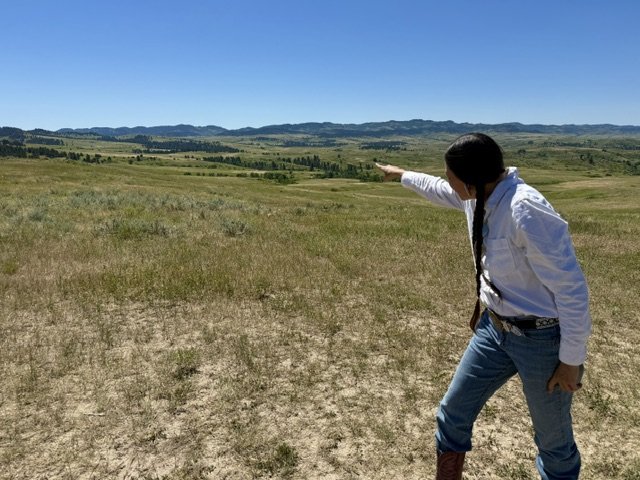
Rose pointed to the horizon often, citing where mountain ranges came together, where Custer split from Benteen, and where each of the columns of soldiers originated in their Spring 1876 mission to push the remaining “Hostiles” onto the reservations. It all kicks off when Two Stars, General George Cook, attacks a sleepy Cheyenne camp along the Powder River on March 17th. Red Cloud, the venerated Oglala Chief, fought for years along with the Cheyenne and Arapaho to protect the tribal hunting grounds along the Bozeman trail. Red Cloud established the Lakotas as the only nation to ever defeat the United States of America on its own soil. But that was a decade before, 1868-1868, with Red Cloud at this point on the reservation, soon attending Catholic Mass, peace be with him & his relatives.

There are deffo some esoteric LIBI points weaved into these videos, one being the Lone Tipi. This deserted frame contained the burial scaffold of a Sans Arc Lakota warrior, Old She-Bear, from the earlier Battle of the Rosebud, on June 17th. Custer paused here to give Major Marcus Reno his final orders to advance and attack the Indian village. I like how Rose points out, with her fingers, how facts and truths may or may not fall together. More on the Native people of the Americas living their best, traditional life soon. In the meantime, come on out this weekend for the very same Ceremonial purification ritual they practiced with regularity. If not, we’ll see you in October, November, or December. Aho Matakuye O’yasin! (We’re related)
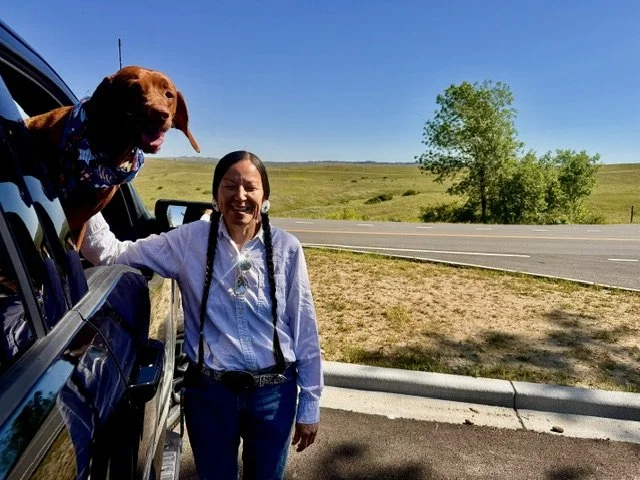
Roses of The Lil' Big Horn Battlefield

Roses of The Lil' Big Horn Battlefield

I drove all the way into town to the South haven library on my sorta day off because we’re Michigan Hillbillies with purposeful bad service. Anyhoot, hoot, hoot, I’m so happy and inspired, introducing you all to Olivia Rose Williamson, with so much more to say, turning it over for now to Rose’s engaging Native knowledge and energy.

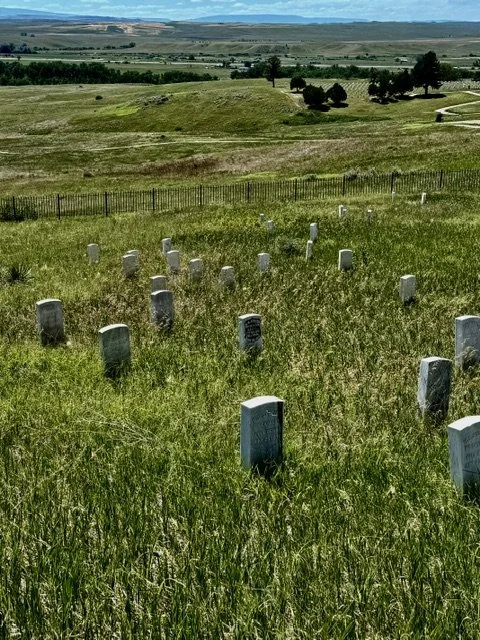
This was my first encounter with her, as we met at the monument on an equally scorching hot Montana summer Sunday morn, and took our tour, beginning and ending at Last Stand Hill. I loved the way she described her peoples’ history and luck getting a reservation on their traditional land. “When the Black Hills end, Crow Country begins. When Yellowstone Park ends, Crow Country ends.” Right on Rose. A very cool, capable Guide. More soon!

Our Life-Changing Journey To The Battle of The Greasy Grass

Our Life-Changing Journey To The Battle of The Greasy Grass

Hokahey. It’s a sad time in America these days, and particularly last week Friday. Twenty-five years ago, on September 11th, 2001, a coordinated terrorist attack led by Al-Qaeda killed nearly 3,000 people in the beloved USA. This summer, during our country’s 250-year Fourth of July celebration of freedom, my red dog RoZie and I journeyed to another seemingly tragic site in our history: The Little Big Horn Battlefield. In southeast Montana, on a scorchingly hot Sunday and Monday one hundred and fifty years prior, a similarly coordinated attack was led by Lieutenant Colonel George Armstrong Custer and the US Army. When thousands of warriors of our land’s indigenous people bravely stood up to defend their sacred, ancestral Way of Life, June 25th-26th, 1876, it was anything but a sad time in America.

Known to the natives as The Battle of the Greasy Grass, the fight occurred in the valley of The Little Big Horn River, where heavy morning dew and moisture on the tall grass left a slick, shiny and greasy sheen, coating the peoples’ moccasins and their horses’ bellies. Custer’s charge was met by a collective force of thousands of Lakota Sioux, Northern Cheyenne and Arapaho warriors. The rest, as they say, is history. “The Battle of the Little Bighorn continues to fascinate people around the world,” reads the park brochure. “For most, it has come to illustrate a part of what Americans know as their western heritage. Heroism and suffering, brashness and humiliation, victory and defeat, triumph and tragedy — these are the things people come here to ponder.”

A big part of our LIBI experience, in Alpha code of the National Park Service, was connecting with the coolest, most authentic, traditional modern scholar of the Battlefield Monument. Her name is Olivia Rose Williamson, Chieftain of Indian Battle Tours. You can look her up on Facebook, but even better, you can catch her energy below. Rose is a Sundancer and the real deal and she made our LIBI visit extraordinary.

I had no idea Battlefield Rose would be this cool, sharing sharp points of history with the energized knowledge of a Native (perhaps still a hostile!), on our crazy cool thirty-mile car ride to Last Stand Hill. That said, I’m just going to let some videos and posts roll, as we also roll into Autumn with newly energized stories, new workshops and Fall offerings, and new pride in our connection to America, the America that existed here long before the founding fathers little bucked shoes even set foot on this land.