Riffs on Pain

This article was written in the Fall of 2014, during the bumpy acquisition of my southwest Michigan farm, a bit of a tumultuous patch in retrospect. But then aren't they all? 

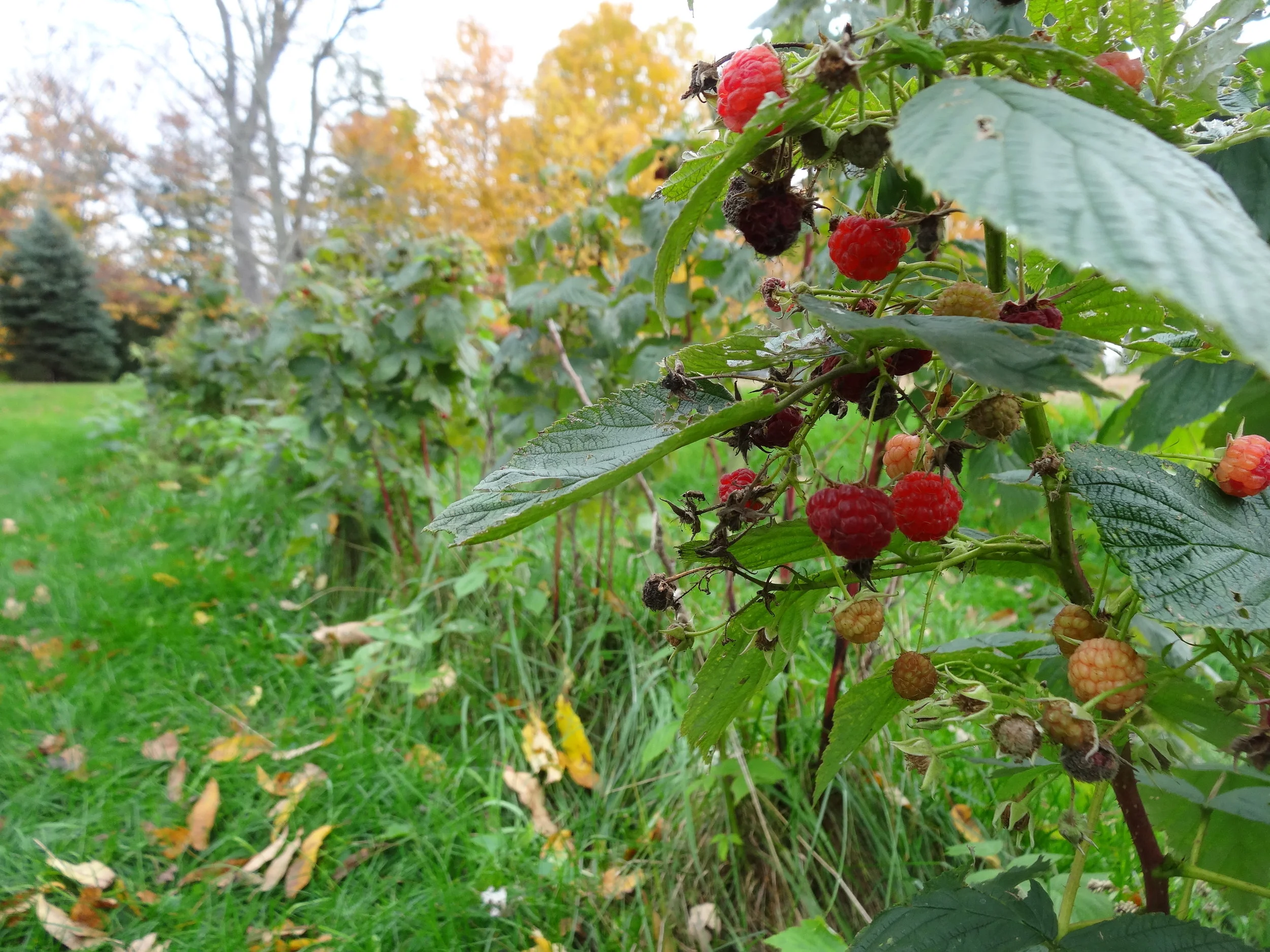
I see I haven’t posted on my blog for almost an entire month, which causes me some painful sensations. I get thinking about pain, and this sends me to the word’s source, which comes from the Old French peine, “difficulty, woe, suffering, punishment, Hell’s torments (11th century) also Late Latin’s poena, meaning “torment, hardship or suffering, the opposite of pleasure. That I find of interest. The pain that’s arisen from my lack of posting doesn’t stay with me long, as many of the sharpened tools of spiritual purification I carry with me at all times from the practice of meditation and indigenous Ceremonial living assist me in escaping into, rather than away from it. I also find comfort in knowing that my time off the blog has been caused by the acquisition of land in Southwestern Michigan, 2 hours from downtown Chicago, that will allow a clearing for me to take my practices to a new level, at the same time assisting others in doing so, which is always a reliable pain reliever, being in service to others. I’m unsure of an appropriate picture for a post that riffs on pain, so I choose a photograph of the ripening raspberry bushes in my front yard, bushes that the former owners tell me will yield a large freezer bag of berries until the first snow, a thought I find pleasurable. I decide to riff about pain a bit, just to get my chops working again, and to work some of the accumulated rust out of my creative system.

“No pain no gain,” I croak feebly. I’m sprawled face down and spread-eagle on the mottled carpet of the local LA Fitness gym, looking up into the watchful eyes of my trainer Celeste. She concurs, and commences to power foam roll my calves for some myofascial release, the innovative technique easing muscle tightness, but at this very moment causes me what feels like more pain than gain. I bear down and attempt to fixate my mind elsewhere, wondering: who exactly wrote no pain no gain? And thinking: whoever did, it’s a good one.

Pain is what most of us are in most of the time,” I overheard John Lennon say years ago on some Beatles special, and it always stayed with me, probably because I recall reacting quite angrily at the time. That’s often the first reaction to hearing truth; I balked at it as people often do, knowing now that the truth demands change and a sense of responsibility. Lennon  spoke it in that deliberate, drawn out Liverpool lipped way that he delivered most of his truths. He was thin, heavily bearded, and next to Yoko in the clip, the time appearing to be the tumultuous period around the band’s breakup. “God is a concept by which we measure our pain,” Lennon begins on the song God, later explaining that, “You’re born in pain… and I think that the bigger the pain, the more God you look for.” Interesting to note that while Lennon was recording this stark denunciation of Christianity at Abbey Road studios, George Harrison was next door completing work on All Things Must Pass. “I was in one room singing ‘My Sweet Lord’,” said Harrison, “and John was in another room singing ‘I don’t believe in Jesus, I don’t believe in nothing’.” Even more interesting to note that both men are now out of the pain of the material world and experiencing what come’s next.

“On the subject of the pain going on and on, check out Rilke’s Duono Elegies, Elegy Number 9.” I’m wrapping up a session with an old counselor of mine, a man I haven’t seen since moving West a decade earlier. Leaving on a high note after having tackled some of my grosser psychological issues, I’m revisiting now years later, happily reporting some of the events of my life and many victories. At the same time,  I divulge how I still feel as if I am struggling terrifically at times. “Rilke always lent a hand on dark nights, why don’t you have another look, hey?”

My friend again point ins me towards the luminous writings of lyrically intense Bohemian-Austrian poet Rainer Maria Rilke, as he did years ago, Rilke was always being source of depth and inspiration, a reliable source of light in the darkness. The artist’s Dueno Elegies are intensely religious, mystical poems weighing beauty and existential suffering, bringing to life a rich symbolism of angels and salvation. The first elegy begins with an invocation of of philosophical despair, the poet asking: “Who, if I cried out, would hear me among the hierarchies of angels?” I trust Rilke, because rather than seeing the Guardians of life on planet earth as some wire-winged, two-bit messengers out to petition the Lord for mankind’s every whim, he instead admits that, “Every angel is terrifying”. Having suffered debilitating depression and creatively drawn from the dark hours of being, Rilke’s passages, especially The Ninth Elegy, are marked by their positive energy and unrestrained enthusiasm. .

“And so we keep pressing on, trying to achieve it,
trying to hold it firmly in our simple hands,
in our overcrowded gaze, in our speechless heart.
Trying to become it” 

“We aren’t going to escape from pain. Pain is a part of nature. But we can escape suffering.” I recall my meditation teacher Shinzen giving a talk on mindfulness and riffing on the virtues of spiritual purification practices, endeavors that can in many ways empower us to vastly reduce our suffering. I consider how pain can drive us to real spiritual work work that eases our aversions to physical and emotional pain while at the same time loosens our clinging to pleasure, and greatly increases overall satisfaction, helping us realize life’s true, effortless nature.

“All pain is the struggle against truth,” I hear one of my teacher’s final take  on the subject.  He encourages his students to journey into the very center of the center of the storm and embrace one’s pain, along with the truth it offers.”You can go around the storm all you want, but until you find the calm center of that storm, the reason for your pain, you’ll just go around and around. Better to embrace pain and let it do it’s work.When you grapple with it rather then circumvent it, when you are willing to engage with it fully, and will rather than wish it away,then you can dissolve it.” This thought also sends a current of hope and good feeling through me, as I decide to wrestle on.

Red Like Ya' Read About

If you’re a person with eyes to see and ears to hear, you’re well aware the plight and spirituality of America’s indigenous people recently rose to the head of our nation’s consciousness. The quick and dirty, with an emphasis on dirty: Standing Rock’s stand-off thrust the spear tip forward on the front line battle over the transition between an old energy and new energy economy. Well explained in one of many posted videos, we’re all up against this challenging metamorphosis, teetering on the edge of an imminent shift.

Wind, solar and hydropower now being so much cheaper than the old energy systems, the carbon cronies quest to maintain market domination relies on the creation of masses of infrastructure. All the folks invested, from Citibank to Wells Fargo to other corporations, wanted oil flowing through that pipeline for years to come, long after any justification for oil vanishes. We’ll no longer buy fossil fuels in the USA, as the switch to wind and solar and electric cars concludes. But this infrastructure allows for selling to poorer countries, perpetuating global pollution, a no-win for every party involved. We’ve all painfully watched an outlaw corporation break the law by combatting peaceful protestors. And the state, rather than coming down on the peaceful side by advocating for law and order, chose instead to employ its awesome military powers of plastic bullets and tear gas on people peacefully asking for order, all on behalf of the criminal.

That’s the quality of information easily read on Facebook or in the Kalamazoo Gazette. The story behind the story, where we go off the map, out past the power lines and up that little side road without a sign, hidden from the mainstream, is where we find the keepers of our ancient future, keepers of the drum. Unknown to most people, the Ceremonial ways of Native Americans offer a path of purification so powerful, the modern ills of anxiety, depression, and addiction are soothed and even alleviated by its healing balm.

Study history and the industrial revolution and you’ll realize how truly remarkable the discovery of three thousand miles of howling wilderness just over the Atlantic’s horizon, a paradise populated by Stone-Age tribes, a native population barely changed, technologically, in 15,000 years. Living in mobile or semi-permanent encampments in the heart of nature left these “savages” with short, brutish and arduous lives, an existence we of the centrally-heated, phone- fixated modern world can hardly imagine. A little over one hundred years ago, these nomadic hunter-gatherers organized their lives and Ceremonies under vaulted ceilings reaching to the sun, moon and stars. Extraordinary purification practices granted them the mystical mindset of the ancients, enlightening many leaders and elders.

Warmed, comforted and technologically obsessed with modern world conveniences leave us equally soft, scattered and disconnected. Gone the fierce edge of fighting for food and survival, and along with it potent rituals of renewal as well as rites of passage. No surprise then the scores of people in contemporary society on “the hunt” today for the sacred, for the grounding providing by native Ceremony. In the Inipi or Sweatlodge Ceremony, one of seven rites of the Lakota Nation, elements of nature – earth, air, space, fire and water along with the human participants –  are organized in a sanctified fashion, fostering experiences of oneness and inner peace on a fast track to well-being. Heated steam combines with darkness, drumming, sacred songs, prayers and spirited community connections, stimulating psychological wellness.

After being invited in like an extended family member in the late 90’s, much of my upwardly mobile, modern world drive fell to the wayside. While I wasn’t exactly transformed into some Native American Saint, I was blessed with a glimpse into my own death as well as the world of the spirit, esoteric Ceremonial experiences leaving me unable to see the point of pursuing anything short of the highest realms of God’s kingdom. Raised in a western, death-denying culture, I was all Noh’-gays – “Ears” in Lakota –  when my teacher, a Sicangu Lakota Medicine Man of Rosebud, South Dakota explained to me: “We Lakotas say that we are born to die.” And believe me when I tell you that no one does Death like the Lakota Nation.

Living that former life, I traversed from my Arizona and later California homeland to the Dakotas several times, and would probably have been rambling to Standing Rock in my pickup truck months ago. Times having changed, committed now to building up a healing retreat center in south western Michigan, lead me to supporting the effort from afar by running several sweatlodges, introducing my new neighbors to the beauty way experience while donating contributions to the Standing Rock camp.

Did you catch the eye-wetting video of a group of veterans standing before the feathered head of a Lakota Chief and kneeling down to ask forgiveness for the way they treated the tribal people of the Americas? Wesley Clark Jr., the son of NATO Supreme Commander Wesley Clark Sr., joined together with a group of veterans and delivered a powerful apology to the Native Americans. The full video, featured on Salon, also features Native elders such as Lakota spiritual leader Chief Leonard Crow Dog and Standing Rock Sioux spokeswoman Phyllis Young.

Clark Jr. states: “Many of us, me particularly, are from the units that have hurt you, over the many years. We came, we fought you, we took your land, we signed treaties that we broke, we stole minerals from your sacred hills. We blasted the faces of our presidents onto your sacred mountain. Then we took still more land, and then took your children. Then we tried to take your language, and tried to eliminate your language, your language, that God gave you, that the Creator gave you. We didn’t respect you, we polluted your earth, we’ve hurt you in so many ways. But we’ve come to say that we are sorry, we are at your service (kneeling), and we beg for your forgiveness.”

After a tremolo, Chief Leonard Crowdog of the Sicangu Lakota Nation of Rosebud South Dakota, Teacher of my Teacher Wicasa Itankan Tatanka Weitgo, responds: “World peace. World peace. We will take a step, we are a Lakota sovereign nation, we were a nation, and we are still a nation. We have a language to speak. We have preserved the caretaker position. We do not own the land, rather the land owns us.” More shortly on what we can learn from tribal societies on healing, loyalty, belonging and the eternal quest for meaning.  Aho matakuye O’yasin (we are all related).

Medicine Wheel Ceremony

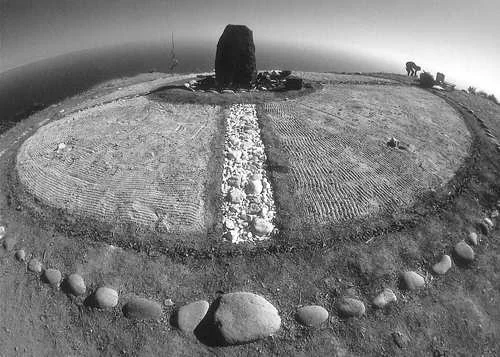
Along with my friend Tara White, I helped facilitate a Medicine Wheel Ceremony this past weekend for a great group in Richmond, Illinois, a pastoral village Northwest of Chicago. Deepening my own learning of the Medicine Wheel’s workings, I’ve come to understand these stone monuments or sacred hoops to be springboards of power, places of religious, ritual or healing forces that link up the energies of the Universe.

The 20,000 wheels that existed on this continent before the European people immigrated here were ceremonial centers of culture, astrological laboratories and places where people would come to pray, meditate, contemplate, strengthen their connection to nature, and come to a higher degree of understanding of themselves and their relationship with all of creation. Although much of the Wheels’ origins are shrouded in mystery, they were and continue to be constructed by laying stones in particular patterns on the ground oriented to the Four Directions, often a symbol or template of the enlightened mind.

Native people think of plants, animals and minerals as having certain powers, and they often refer to these other beings as totems, or as our relations. For human beings seeking a right relationship with the rest of creation, the sacred Medicine Wheel can help bring a sense of balance, restoring harmony. Medicine Wheels were usually placed on areas where the energy of the earth could be strongly felt, and their use in Ceremony strengthened their Ju Ju. Consequently, Medicine Wheel areas became what people now call vortexes: places of intense earth energy and reinvigoration. The new areas where Medicine Wheels have been built are serving the same function, including Tara’s backyard layout.

Surrounded by knotty old Oaks, just being outside on the grass in the April sunshine provided us uplift. And mediating to the sound of singing Rock Wrens and Eastern Whip-poor-wills brought a collective inner and outer cheer to all. Considering neither Medicine Wheels nor Journeying have been practices that have played a major parts in my own learning or teachings, the day flowed melodiously, as I personally employed the Helpful Hints For Journeying provided by Tara, specifically #4: “Remember the times you have observed children approaching a new experience with curiosity, awe and wonder, bringing their innocence and trust to the exploration. Tap your own curiosity and sense of wonder.”

Many thanks to Tara, Rick, Roxanne, and others, especially fire tender Shadow Mountain,  who passed on some great teachings about the land. I’m excited to explore further summer gatherings around the Medicine Wheel in the coming months.